

In the contemporary world, the network society theory highlights how the decentralized digital platforms have played a significant role in enriching civic cultures. Production, distribution and consumption of information, now deeply embedded within social media, has shaped political mobilization and coordination, threatening status quo. In a decentralized network system individuals act as nodes that serve as information dissemination points leading to increased political awareness and engagement. At the centre of this decentralization, is one key node, Allans Ademba.
He is 26 years, a journalist, political activist and the founder of the Niko Kadi initiative, a youth-driven movement focused on mobilizing young people to register as voters. Born and raised in Kibra, he was exposed early to challenges of poor governance, poverty, unemployment, corruption and insecurity. These experiences shaped his desire for activism, civic engagement and accountability.
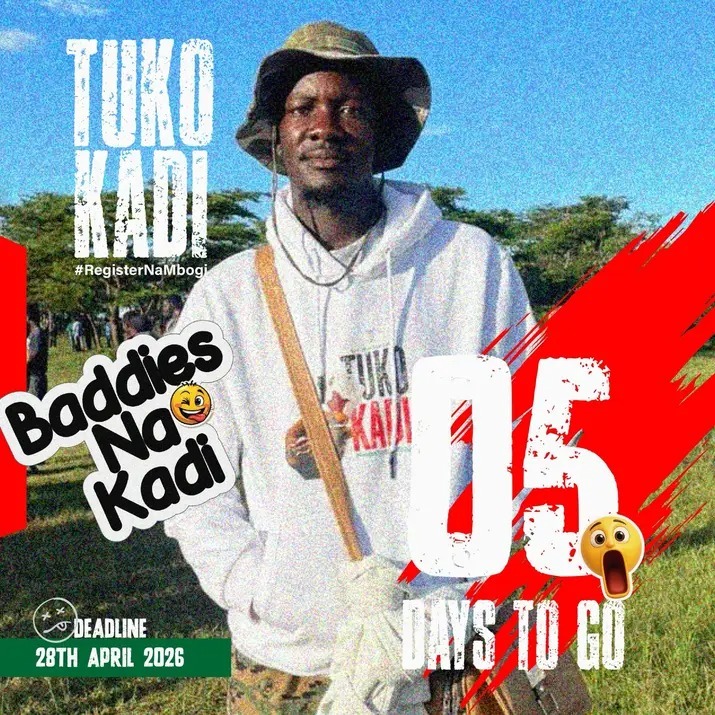
Ademba rose to prominence following his online activism and gained traction through the BBC documentary Blood Parliament (2025), which highlighted the Gen Z protests and the events surrounding them. In the said documentary, he was featured as part of the frontline responders aiding victims of police brutality, an effort, he says was largely driven by a sense of humanity and responsibility to help those affected.
Allans understands that the youth are pivotal in shaping the political system and this influence can be exercised through various avenues. He has been at the forefront of the growing convergence between political engagement and digital revolution. Reflecting on the Gen Z protests which were influenced by social media, he argues that although the initial objective of rejecting the Finance Bill 2024 was achieved, the impact of the movement should not be measured only by immediate outcomes, but also by the broader political consequences it triggered; for instance, the withdrawal of the Finance Bill, austerity measures and the suspension of the Cabinet. Success, he believes, is not solely defined by achieving a single end goal, but also by the change in civic awareness and political consciousness that come from the protests.
Post the protests, Ademba continued his social media activism, through his brainchild, the Niko Kadi initiative. This catchy political slogan drawing “buddies” to register as voters was not conceived from the boardroom or a structured meeting, but from a WhatsApp conversation between the Niko Kadi founder and his friend. What began as a simple spontaneous chat snowballed into a movement. Despite the voter apathy among the youth, the initiative situates itself as the intersection between modern mobilization and the drive to increase youth voter registration. In this context, vibe and civic responsibility intertwine to shape political engagement reflecting the social constructivist view that good governance is not merely the product of an individual action, but also socially produced through collective participation. While the numerical strength of the youth is an advantage, their disinterest in political participation often weakens their influence.
The Niko Kadi campaign which triggered a surge in registrations and signalled a potential disruption in the political matrix, operates on volunteerism and lacks a formal leadership structure. Young people from different parts of the country organize activities independently under the Niko Kadi banner, many of whom Ademba claims to have never met personally. At the time of this interview, he had been invited to Kisumu by a group of youths whom he had no prior interactions, for a voter registration drive under the initiative’s banner. The social media activist has been passionate about registration of voters noting that now more than ever, the youth are more confronted by the harsh economic realities than any other group.
“We are now the adults and therefore the consequences of political decisions affect us more directly than ever before”.
While the initiative has been linked to different political aisles, he maintains that it is not associated with any political party or group, adding that the slogan is a concise expressive call for national civic action and transcends beyond party lines. Allans told this Magazine, that the objective of the movement starkly contrasts the political agenda of the political parties and respective candidates as it is solely focused on simplifying the voter registration process. He further clarified that the movement does not seek to influence voting preferences, dismissing claims linking it to Linda Wananchi and reiterating that it was non-partisan.
It is often observed that when marginalized groups begin to gain access to power, they tend to face political backlash. Ademba has not been spared. While digital activism has created transformation in the civic spaces, he noted that it has come at a significantly high cost particularly in relation to his security, surveillance and coordinated disinformation campaign. Since appearing in the BBC documentary, he has been under increased surveillance a situation that intensified following the launch of the Niko Kadi initiative. Unusual disruptions in his phone, physical surveillance by unnamed individuals and infiltration of the movement by suspicious youths lie beneath the digital glamour. However, even in the face of the immense pressure, he has remained resolute, albeit more cautious in his daily movements, often preferring to use public means of transport as opposed to uber services.
Attempts by different political and civil actors to lure or co-opt Ademba in a bid to leverage on his influence over the Gen Zs have largely failed. The Niko Kadi initiative which has contributed to the success of IEBC in registering 2.6 million new voters and widely regarded as a game changer, has faced resistance from the rigid formal organizational structures. The Civil Society Organizations, have viewed the initiative as a disruption to the existing structures, limiting their access to IEBC funding for civic education and mobilization. Similarly, certain political actors have shown discomfort with the movement because of its potential to influence new voter turnout, electoral dynamics and reshape existing voting patterns. This, has in turn, triggered attempts of infiltration and association by political elements to the movement without his explicit approval. Further, it has been subjected to a disinformation campaign stifling and undermining its legitimacy, including allegations of foreign funding. Despite it all, Ademba remains steadfast.
Speaking also as a youth on the whether the government has done enough to address the concerns of the youth, he argues that much of what has been witnessed amounts to “performative development.” He questions whether flagship projects such as Affordable Housing, NYOTA, stadium construction and major infrastructure developments, truly address the immediate priorities of ordinary young Kenyans. While some of these projects may be beneficial in principle, he contended that development should first focus on strengthening sectors before investing heavily in large-scale projects.
“For instance, priority should be on strengthening and supporting the sports sector before constructing mega stadiums. Local talent and the creative economy have also not received sufficient support despite their potential to create employment opportunities for young people.” said Allans Ademba.