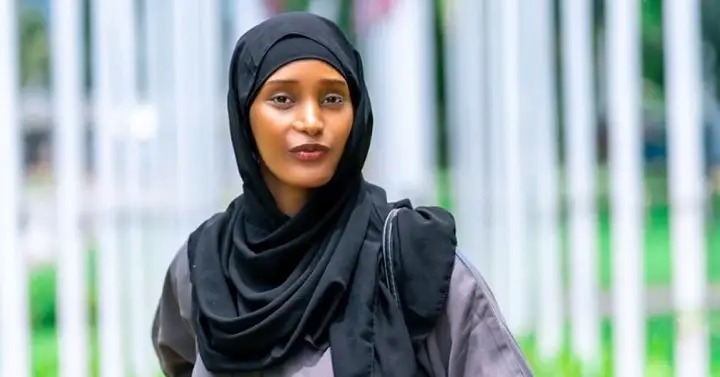
Hanifa is a journalist, human rights defender and social media influencer well known within online civic and advocacy spaces. She uses social media as a tool for political reform and sanctuary for social advocacy; raising awareness about specific issues, advocacy and mass mobilisation, calling for action and creating reaction.
Since her formative years, Hanifa has been vocal against societal injustices and has note shied from calling for action or taking one. One notable incident from her childhood was when she volunteered to serve as a witness after a young man was robbed across the street from her home, despite her family’s strong objections. In another instance, she intervened after seeing a man violently assault his wife, an act that escalated into her being physically attacked in the process.
She blazed a trail in public accountability years ago and has leveraged the digital revolution to galvanize change leading to array of victories on various fronts. For instance, in 2022, after raising a concern on the poor state of Korogocho drainage system, an informal settlement in Nairobi County, she prompted intervention and subsequent repairs by Governor Johnson Sakaja. She also launched an exposé on Mandera County under the hashtag #FreeMandera, whistle blowing the entrenched corruption and the misuse of public funds, particularly in the administration of county bursary allocations. The campaign, which she says exposed deep-seated irregularities, allegedly triggered threats against her family, ultimately forcing her to halt the initiative.
Rewinding to June 2024 when the virtual campaign dubbed The Days of Rage eventually morphed from online outrage into a revolt, Hanifa was on the frontline of the anti-finance bill protests. Drawing and leveraging on her social media strength, she mobilized, coordinated and amplified the public sentiment online. She emerged as the poster child of the movement and bore the brunt of media attention when the pulse of the revolution was high. While the protests were unprecedented, organic with no formal political backing or figurehead, many looked to her for periodic updates and her platforms served as a coordination hub for the movement.
Owing to the trust she inspired, Kenyans of goodwill raised a total of Kshs. 31 million to offset the medical and funeral expenses of the victims of the demonstrations when Hanifa alongside other activists launched the fundraiser referred to as ‘Care For The Injured’. The fundraiser gained momentum and within a record two days, Kshs. 24 million had been fundraised. With the help of M-changa group, she visited the victims nursing injuries from the Occupy Parliament protests and channeled the money to their hospital bills and the bereaved families of the martyrs of the protests. She attributed the support she received, to her brand of trust and accountability. However, despite the confidence placed in her by many Kenyans, sections of social media later raised concerns about the expenditure of the funds, calling for greater transparency and accountability prompting her to give a full audit report.
The same platforms that empower revolutions are also rife with risks. While technology on its own is neither inherently patriarchal nor violent, it can be socially shaped to influence technology-facilitated online violence. Hanifa has been a victim of this frontier of abuse, including misguided criticism that previously forced her to deactivate her accounts. Gradually, she has learned to rise above the cyberbullying. She shared that some of her most traumatic social media experiences which left her constantly paranoid, include an incident when a blogger exposed her location, leading her to fear for her safety. In another distressing moment, in an attempt to discredit her, netizens used AI to digitally “undress” her, placing her in a bikini and shared Islamophobic imagery and body shaming threats, violating her privacy.
Hanifa shared that the mother of all verbal abuses was when netizens christened her as a sellout following her tweets urging the protestors to abandon their mission to occupy statehouse.
“Cook me all you want; we can march anywhere else but not statehouse. Don’t go to statehouse, do not go statehouse.” – an X Tweet by Hanifa Adan.
While she told this Magazine that her tweets were informed by what she saw firsthand, dead bodies on the street and the victims of the protests in hospitals, her account was met with skepticism. Once fondly referred to as a revolutionist, she was later branded as a traitor amidst claims that she was complicit in rapturing the Gen Z protests. Other critics argued that her posts were a flimsy excuse and thinly veiled attempts to hide that she was paid to disperse the Gen Z movement protestors. Dismissing the claims of betrayal, Hanifa questioned why she would remain openly critical of the current regime if she was on a payroll, also noting that it would be implausible to be “paid for a single moment” of engagement. In her defense she stated:
“Time has vindicated me over and over. There is nothing they haven’t done to tarnish my name.” Most of the people telling people to go to statehouse were never on the streets, twitter folks are never on the frontline… It was an excuse to dump things on me.”
While there have been allegations that she is seeking a political office in August 2027 General Elections, Hanifa has stated that she currently has no political ambitions, though she has not ruled out the possibility of the same in the future. She further explained that despite reported attempts to lure her into different political camps, she has remained unaffiliated, maintaining that money is not a motivating factor neither is self-aggrandizement and her unwavering principles of good governance are driven by the experience of witnessing the events of the “TotalShutdown” protests.