

The Independent Electoral and Boundaries Commission (IEBC) has rolled out continuous voter registration with a budget of KSh 8 billion, targeting 6.3 million new voters, most of them first-time participants. This is a commendable step toward strengthening democracy and representation, especially at a time when the voice of young Kenyans has grown louder following the 2024 Gen Z protests. However, despite the progressive intent, this week’s exercise has been marked by low turnout. A key reason could be the heavy reliance on manual registration, which creates bottlenecks, limits access points, and introduces bureaucratic delays; discouraging the very youth who should be at the heart of the electoral process.
Kenya’s greatest democratic strength lies in its youthful population, with over 70% of citizens under the age of 35. This demographic is not only the largest voting bloc but also the most digitally connected. According to the Communications Authority of Kenya, more than 26 million young people own smartphones, and over 20 million actively use the internet, engaging daily with platforms such as M-PESA, eCitizen, social media, and Uber. Today, one can open a bank account in the United States while seated in Nairobi, or order and receive a meal from the comfort of their living room through Glovo. From paying bills to accessing government services, technology defines their everyday experiences. For this generation, convenience, speed, and accessibility are not luxuries, they are expectations. Yet, the current voter registration model, tied to physical centers and paperwork, feels outdated and detached from their realities. To achieve true inclusivity and higher youth turnout, voter registration must be redesigned to mirror this digital lifestyle. Only then will democracy fully resonate with the energy of Kenya’s youth.
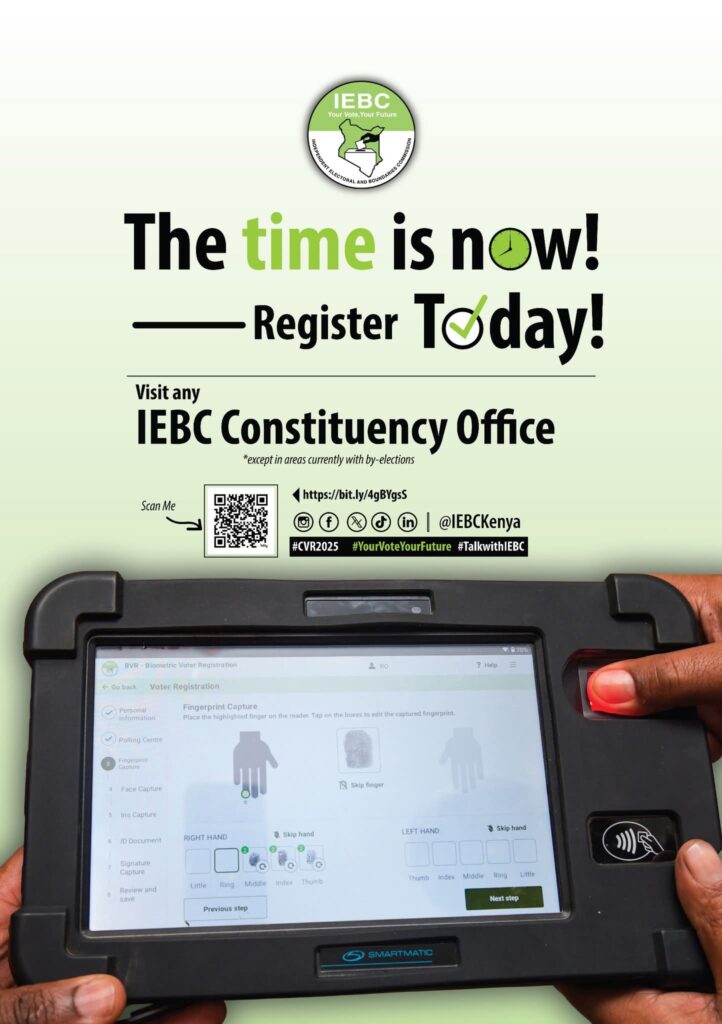
Despite the good intentions of continuous voter registration, the manual approach presents major barriers. Queues, bureaucratic delays, and limited registration centers reduce efficiency. Take Kakamega County, for example, which has a target of over 300,000 new voters but relies on just 12 constituency offices. Each office is equipped with only three kits; two reserved for local registrants and a single “open” kit for nationwide use. This setup automatically creates inequitable access, particularly disadvantaging rural youth compared to their urban counterparts. For young people accustomed to convenience, such hurdles discourage participation and risk excluding a critical generation from shaping Kenya’s democracy.
The future of voter registration in Kenya lies in embracing digital transformation. A fully digitized voter registration platform; accessible via mobile apps, USSD codes, and integration with existing systems such as eCitizen would make the process more convenient and inclusive, especially for young people already accustomed to digital platforms. By incorporating biometric verification and secure online systems, the IEBC can safeguard against fraud while ensuring credibility and transparency. Importantly, digitization should not eliminate physical centers but rather complement them, providing multiple pathways to registration so that no citizen is left behind. Global experiences offer valuable lessons. Rwanda has successfully deployed digital IDs and civic tech innovations that streamline citizen services. Estonia has pioneered e-voting, making electoral participation seamless and secure. India’s Aadhaar system, despite its scale, has enabled millions to access government services and elections with biometric authentication. Kenya can adapt these best practices to strengthen its electoral infrastructure prioritizing transparency, building trust, and aligning with the digital realities of its youth. Such a move would not only modernize the registration process but also help dismantle the structural barriers that have historically excluded young voters. Ultimately, digitization is not just a technological upgrade; it is a democratic necessity.
From a financial perspective, digitizing voter registration makes long-term economic sense. The IEBC has allocated KSh 8 billion for the current manual registration drive, yet much of this cost goes to staffing, paperwork, and logistical expenses that recur every electoral cycle. A digital system, once established, significantly reduces these recurring costs by cutting paperwork, streamlining verification, and enabling real-time data management. The efficiency gains not only save money but also reduce errors and delays that often undermine trust in the process. Ultimately, digital registration offers a sustainable, cost-effective solution that strengthens both democracy and fiscal responsibility.

For Kenya to achieve a fully digitized voter registration system, all stakeholders must play their part. The government must provide clear policy direction and allocate sustainable funding to modernize the IEBC’s systems. The private sector, particularly telecoms and tech firms, can supply the infrastructure and innovations needed to secure and scale digital platforms. Civil society organizations and youth movements, on the other hand, have a crucial role in advocacy and running digital literacy campaigns to ensure no citizen is left behind. Together, these partnerships can transform registration into a more inclusive, transparent, and future-ready democratic process.
Digitizing voter registration must not be seen as a luxury or an afterthought it is a democratic necessity. In an era where Kenya’s youth live, work, and connect digitally, the electoral process must reflect this reality if it is to remain credible and inclusive. A fully digitized registration system offers accessibility for the busy urban youth, fairness for those in rural areas, and sustainability through reduced costs and improved efficiency. It is about building a system that speaks the language of today’s generation while safeguarding the future of our democracy. The youth, as the largest voting bloc, must take the lead in demanding reforms that align with their digital lifestyles and pressing leaders to invest in systems that strengthen participation. If we truly want a vibrant democracy that reflects the will of all Kenyans, then digitization is the bridge between promise and practice, inclusion and exclusion, protest and progress.

Alfred Makotsi
Alfred Makotsi is a PhD Candidate (Diplomacy and International Relations),
Mandela Washington Fellow (2025)
IGAD Leadership Academy Fellow (2025)
PLGP Fellow (2017)