

Across Africa, land is more than a resource for beholds memory, identity and, increasingly, has been a site of global contest.
For generations, African communities have maintained a close and often inseparable relationship with land. It has served not only as a source of livelihood, but as a foundation of social order, culture and continuity.
This attachment, frequently dismissed in modern economic discourse as sentimental or resistant to progress, reflects a deeper historical logic, one shaped by survival, displacement and inheritance.
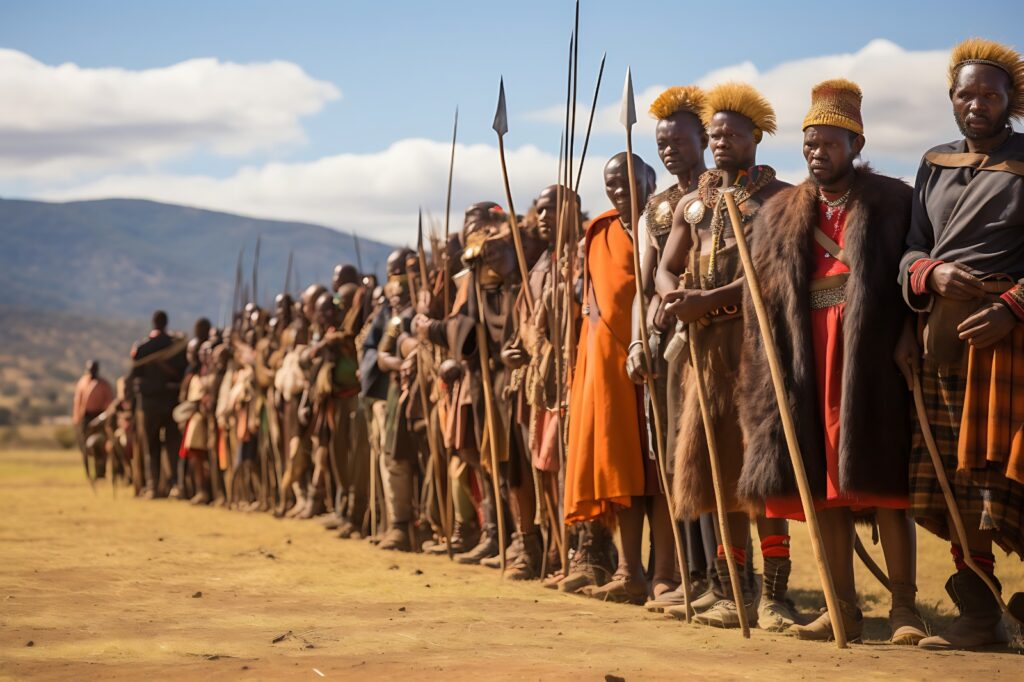
Before the imposition of colonial rule, land in many African societies was held communally, managed through systems that balanced human need with ecological sustainability.
These systems were neither static nor primitive; they evolved alongside communities and environments, sustaining both. The disruption of this relationship began with colonial expansion, where land was redefined as property, surveyed, demarcated and transferred into the hands of settlers and imperial administrations.
The consequences of this shift continue to reverberate to this day, with significant gaps in both understanding and addressing these concerns. In Kenya, for instance, the struggle over land formed a central grievance of the Mau Mau Uprising, where resistance was driven in large part by dispossession.
It is notable that colonial policies not only alienated land but also institutionalised inequality, rewarding collaboration and punishing resistance, thereby fracturing communities and embedding divisions that persist to this day.
Post-independence governments inherited these contested systems, often without fully resolving them. The result has been a pattern of unresolved land claims, informal settlements and periodic conflict.
The 2007–2008 post-election violence in Kenya offered a stark reminder of how deeply land grievances remain embedded in political and social life, capable of resurfacing with devastating consequences.
Yet, the significance of land in Africa is no longer confined to questions of history or identity. It is increasingly tied to the future, specifically, to the global transition towards clean energy.
Beneath much of the continent’s land lie vast deposits of critical minerals essential for modern technologies: cobalt, lithium, rare earth elements and others. These resources are central to renewable energy systems, digital infrastructure and defence technologies.
Africa holds an estimated 30 percent of the world’s known mineral reserves, placing it at the centre of emerging global supply chains. As major powers seek to secure access to these materials, the continent has once again become a focal point of external interest.

New forms of partnership, ranging from investment agreements to strategic alliances, are reshaping Africa’s engagement with the world. However, this renewed attention raises familiar questions.
To what extent will African states and communities benefit from the extraction of these resources? And will the patterns of the past, where external actors extracted value while local populations remained marginalised, be repeated under a different guise?
The development of mining corridors and large-scale extraction projects has already begun to alter landscapes and livelihoods. While these initiatives promise economic growth and infrastructure development, they also risk deepening inequalities if governance frameworks remain weak or exclusionary.
In many cases, local communities continue to face displacement or limited participation in decision-making processes, echoing earlier eras of land appropriation.
At the same time, there is an emerging recognition across the continent of the need to renegotiate this relationship. African governments, civil society actors and regional bodies are increasingly advocating for greater control over natural resources, value addition within the continent and more equitable terms of trade. The question is no longer whether Africa possesses valuable resources, but how it chooses to manage them.
This brings the discussion back to land, not simply as territory, but as a foundation for sovereignty and development. The enduring attachment to land observed among African communities may, in this context, represent not a reluctance to modernise, but a form of resistance shaped by historical experience.
It reflects an awareness, however implicit, of the consequences of losing control over land and the resources it holds.
In the present moment, Africa stands at a critical juncture, one that is set to define its future trajectory, whether as a leader in the global transition or as a continued site of vulnerability, as prevailing rhetoric often suggests.
The convergence of historical land grievances and contemporary resource demands presents both an opportunity and a risk. Managed effectively, the continent’s mineral wealth could support sustainable development and strengthen economic independence. Mismanaged, it could reinforce cycles of exploitation and conflict.
The challenge, therefore, is not merely technical or economic, but fundamentally political and ethical: how to reconcile the legacy of dispossession with the demands of a rapidly changing global economy.
Land, in Africa, has never been just land. It remains the ground upon which the past is contested and the future negotiated.

Kwabe Ben Victor
Kwabe Ben Victor is a multimedia Journalist passionate about creating in a storytelling style. A style that is embedded in curiosity, researches, critiques, and reflections of societal daily lives.