
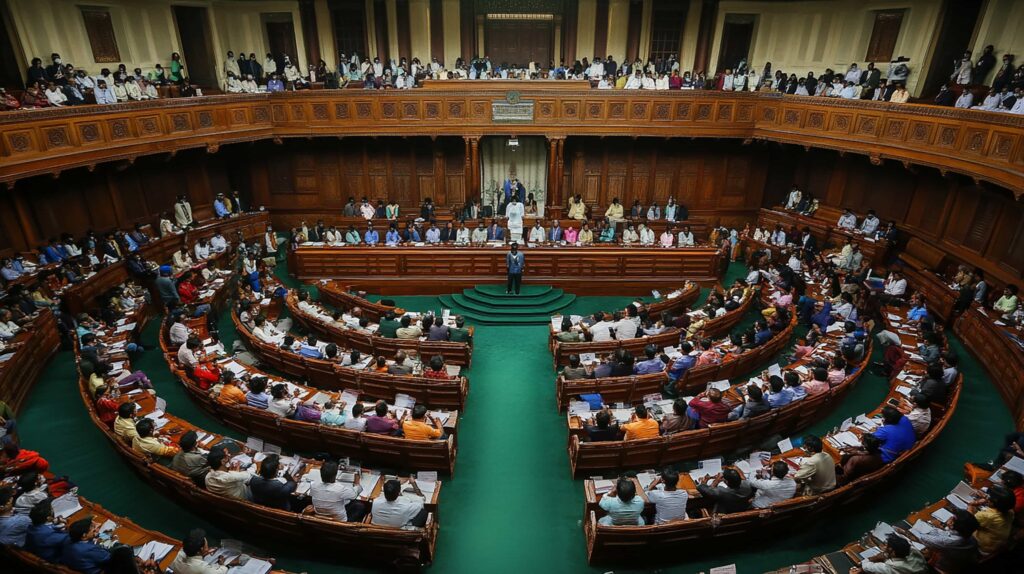
The Nairobi governor is arguably the most powerful and consequential elective position in the country after the presidency. The county is the economic hub of East Africa and boasts a GDP of $28 Billion, which triples the “Singapore of Africa”, Rwanda, as per utterances by its boss, Governor Sakaja. Such economic ability has steered the county into the hands of wheeler-dealers and pseudo-deep states that are choking the city of every potential it once had.
Since the adoption of the 2010 constitution, Nairobi has had six administrators (three elected governors plus those in acting capacity). In that time, no governor has been re-elected to the office. This is just an indication of how dismally they have performed. The character and skill range of those who have held the office is quite diverse. At least one had to perform, but none did. Nairobians first elected Kidero, who was seen as a technocrat and could steer the County in a corporate way. However, he failed. They replaced him with a street savvy humanitarian, Mike Sonko who did not even complete his term.

The details surrounding Sonko’s impeachment are still murky to say the least. The “deep state” got him barely three years into his term. He signed the functionality of the city over to NMS in a deal that he claims not to have had sufficient time to understand. Then president Uhuru Kenyatta had orchestrated the NMS move to deal with the city’s activities.
The Nairobi governorship has proved to be a graveyard of political careers and there is no clear sign that it will become any less perilous for future office holders (spare a word for Babu Owino who has set his sights on the hot seat). It can be said without much doubt that Sakaja’s political career had been on a steady rise before he became the governor. The city hall job has done more damage to his political career than the ten years he steered from elective politics and instead opted to run things as chairman of Jubilee. In three years at the helm, the man that was once a “super senator” is getting backlash from all the corners of the city for how he runs the city. But does he run it? Has he ever run it?
The problem cannot surely be with the governors.
Like all the governors before him, Sakaja was bound to fail. Or rather, he was put in a situation to fail. There is no winning with Nairobi. Everybody is out for your head. Every sector has a deep state that runs deeper than the governor. There exists a number of deep states that make it difficult for any governor to work. Nairobi has tried many characters and it has always come tumbling down. Even the military at some point, for god’s sake.
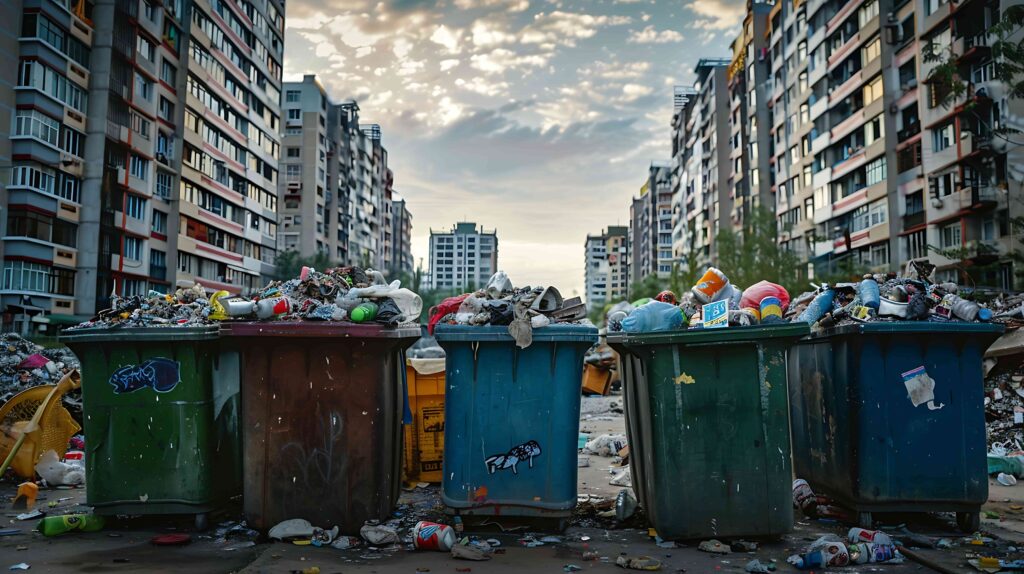
Sakaja isn’t mad to the extent of not picking garbage. Same as the other 6 administrators. So, when you see the garbage on the pavements of the city just know there is a wheeler-dealer situation at play. In fact, there is a standoff in the dark rooms, and Sakaja is waiting for instructions. The next time hawkers are dealt with inappropriately, you should be aware that Sakaja didn’t make the decision. It was made by a person who was there before Sakaja and intends to be waiting when the next governor arrives. In these circumstances, you blink, you lose.
His recent coalition with the national government is the clearest illustration that he has blinked and lost. He has therefore decided to seek reinforcements or maybe bow to his oppressors.
Who knows? This is the trap that Sakaja has found himself in. And he is not going to be the last.
What’s worse is that there seems to be no solution to this debacle. In fact, humorously, the Nairobi Governor should behave like the trendy sharp boy. No name, just running operations and making decisions from a laptop in a cold and dark bedsitter in Kasarani. Away from the prying eye of the deep state and the hawk-eyed wheeler-dealers.
Inevitably, we have to rethink how to handle the Nairobi situation. Sooner or later, the cartels will have captured every conceivable sector in the Nairobi economy. And we will have no means to salvage it. Let alone know how deep it runs.
Every person gets into the office with ambitions of transforming it into. Sakaja himself was hopeful in vision; “Every Kenyan wants the same thing; to go about their lives peacefully, make something out of themselves and guarantee their children a future – HOPE”.
I can bet he lost all that hope on his first day in office. That day must have gone something along these lines during the introductions.
“I am so and so, I run Parking.”
“Mr. X, I collect garbage.”
Then he turns to his secretary;
“What do I do?”
To which she replies
‘Thank God, at least you have the office. Sonko operated from the halls.”