They said Kenya had entered a new dawn, a nation of institutions, not individuals. But as the sun rises in 2025, it shines on a darker reality: our democracy is being auctioned off by political leaders. President William Ruto’s recent move to buy off Gideon Moi, persuading him to step down from contesting the Baringo senatorial seat in favour of a UDA candidate, is not just political; it is an assault on the very soul of multiparty democracy.
Let’s call it what it is; a political shopping spree, a charm offensive dressed up as “Unity for Kenya.” But beneath that soft rhetoric lies a calculated demolition of dissent, the slow strangulation of opposition, and the erosion of the democratic gains Kenyans bled and died for.
Kenyans remember the bitter struggle for multiparty democracy. We remember the brutal detentions, the silencing of voices, and the lives lost to authoritarian rule. The constitutional freedoms we enjoy today, the right to assemble, to criticize, to vote freely, were not mere gifts from the privileged political elites but were won in the streets by citizens who defied dictatorship.
And yet, here we are again, watching as the government repackages authoritarian control as “unity”, tightening its grip on people’s collective voice and will. When opposition leaders are lured, intimidated or financially seduced to join the ruling party/coalitions, that is not political reconciliation; it is political capture. It is a new kind of dictatorship; one wrapped in the language of peace and progress.
President Ruto’s so-called unity drive is not about nation-building, it is about empire-building that is built to deliberately weaken of political diversity, the very essence of democracy. By buying out politicians from rival parties, the regime is ensuring that in 2027, there will be no credible opposition left to challenge its excesses.
The KANU Chairperson, Gideon Moi’s withdrawal is only the latest in a string of quiet political assassinations, not of physical bodies, but of ideals. Others are expected to follow, enticed by promises of “working with the government.” But the truth is they are being absorbed into a system designed to neutralize dissenting voices and tame parties with strong grassroots support in their own backyards . Before long, Parliament will echo only one song, “UDA”, and when the opposition goes silent, tyranny becomes policy.
This is not just political theatre; it’s legislative warfare. The government has already pushed amendments to the Political Parties Act that would allow elected leaders to defect freely without losing their seats. That is not reform, it is sabotage and use of democracy as a tool for consolidating power. It turns political parties into temporary vehicles for personal gain rather than instruments of ideology and accountability. When laws are bent to protect defectors and punish dissenters, democracy is no longer a system; it becomes a stage-managed performance. We pretend to have opposition, but in reality, the script is already written.
Unity or Uniformity?
Let’s be clear: unity is not the absence of disagreement. A nation without opposition is not united; it is oppressed. Kenya’s beauty lies in its plurality, its competitive ideas, its noisy democracy and to reduce all that into one ruling narrative under the banner of “unity” is to betray the foundations of the Republic. Those who fought for pluralism, from Kenneth Matiba to Raila Odinga, from Wangari Maathai to the countless nameless patriots, did not struggle so that one individual could monopolize political loyalty. They did not risk their lives for us to slide back into the shadows of one-party dominance. The price of freedom was too high to be traded for political convenience.
While billions are spent on political seduction, ordinary Kenyans are suffocating under the weight of taxes, joblessness and hunger. Schools are underfunded, health facilities are crumbling, farmers are desperate. Yet, the government’s priority seems to be consolidating political power, not service delivery. It is an insult to every struggling Kenyan to watch state resources being used to fund defections instead of development.
Unity cannot be bought. It must be built through justice, fairness, and inclusion. However, how can we speak of inclusion when the goal is to silence everyone not singing from the same hymn sheet? Kenya stands at a dangerous crossroads. One path leads to genuine unity, where political competition coexists with national interest, where institutions outlive individuals. The other path, the one we are dangerously treading now, leads to tyranny disguised as democracy.
The signs are clear. When the executive captures Parliament, when dissent is punished, when criticism is criminalized, when opposition leaders are “bought” instead of engaged, we are watching the systematic dismantling of democratic checks and balances. History tells us where that road ends: in repression, corruption, and collapse.
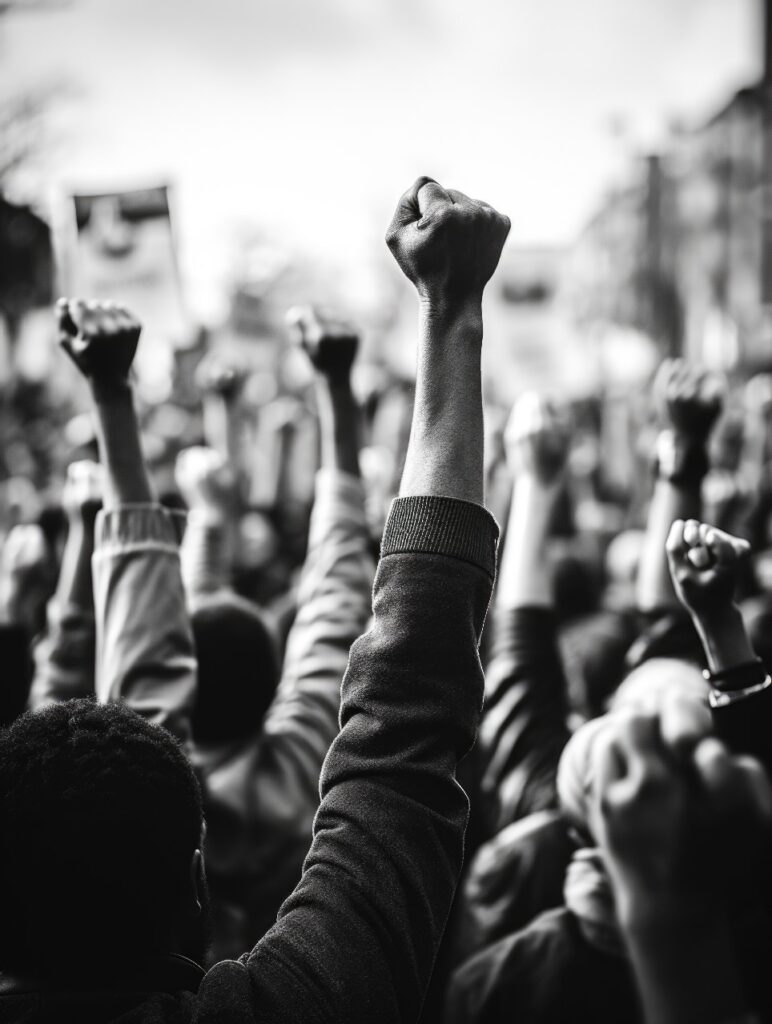
It is time for Kenyans to wake up. Democracy is not a spectator sport; it demands vigilance. Citizens must speak up, challenge the normalization of bribed loyalty and reject leaders who trade principles for proximity to power. Civil society must rise again. The media must be fearless. The opposition must find its voice, even if it means standing alone because true leadership is not measured by comfort in numbers but by the courage to speak when others choose compliance.
For if we remain silent, soon there will be nothing left to defend. We will wake up to find that our democracy did not fade overnight; it was bought, piece by piece, while we applauded “unity.”
Gideon Moi’s capitulation is not an isolated event. It is a warning flare that shows us how fragile our democracy has become, and how cheaply it can be sold. The question now is not whether Ruto will succeed in buying off the opposition. The question is whether Kenyans will allow it.
Let history record that we did not stay silent as democracy was auctioned in broad daylight. Let it be recorded that we refused to trade freedom for favour. Kenya must remain a land of many voices, not one ruler’s echo chamber.
Because once the last voice of dissent is bought, the Republic itself is lost.

Bill Clinton Oulo
Bill Clinton Oulo is a Health Economist and Policy Professional with over five years of experience in public health research, sexual and reproductive health, and wellbeing economics.
He is a former President of the University of Eldoret Students Organization(UoESO), a Leadership and Governance Mentor, a Youth Leader.
Bill has played a part in the Political space of the Country with the recent one being National Lobby groups Coordinator for Azimio la Umoja Campaigns, 2022.